FROM THE COMMUNITY COLLECTION
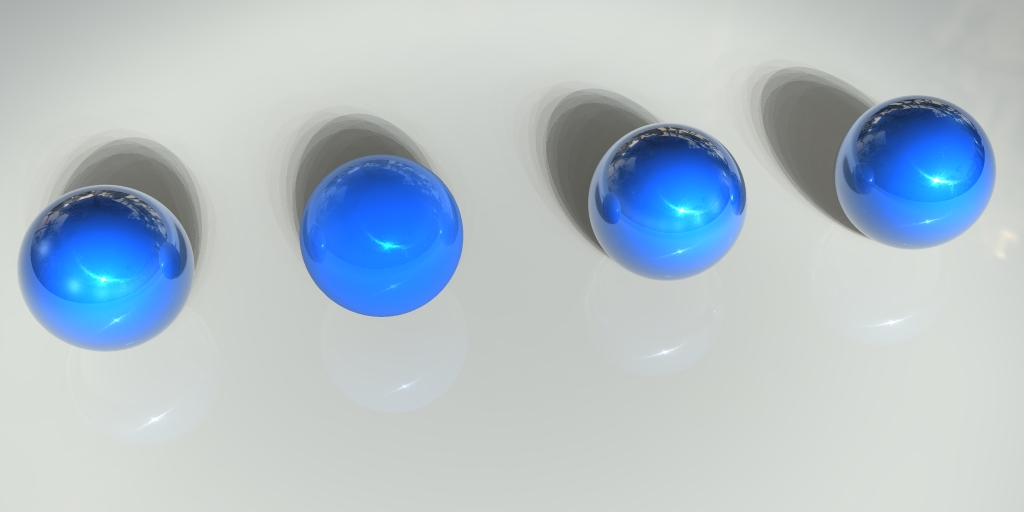
Using Gloss Coats to Stimulate Specularity - IBL
Please refer to the first image for specifics. Same scene here, but rendered with "Shady Beverly Hills.hdr" found in the presets folder that came with Bryce. Again, which one looks better?
Loading unique views3,927 unverified legacy hits0.0 archived rating2007-08-08 added
Comments 4
A conversation around the artworkSign in to join the conversation.
These tests are interesting and I'm looking forward to give this idea a whorl myself. The result is convincing. The main issue with this method is what David mentioned: elaborate shapes. We all sort of complain to have lost the specularity channel with IBL. In fact, specularity the way Bryce uses it, is not a natural phenomenon, it's a trick to simulate the effect of reflection on a matt surface. We've experimented a lot with making a surface dull with a high frequency material for bump to simulate the specularity effect when using an HDRI. I came to the conclusion that - at this point at least - the best way is using a specular map. This is essentially a very blurred HDRI that is reflected on the object.
Interesting... My issue would be that it is difficult to create a "skin" for a complex model. A sphere is compliant since it is comprised entirely of convex geometry, but with something like say, a car body - if it is comprised of one homogenious part then scalling it slightly larger is not going to have the desired effect over it's entire surface. Specularity, I achieved by adding standard bryce lighting into the scene (since these stimulate the specularity - in just the way that IBL does not). Horo employed a much more complex method which I will not even attempt to explain! I'm happy to leave the rocket science to the rocket scientist!
Yep, 17 minute render here.
Aha, now this is a test I can really groove to. Specular is "broken" in IBL. So sad. Reflection is all we have to work with. Horo and David have both managed to create false specularity in IBL situations, but I have never tried so I'm not sure how they did it. Transparency adds tons of time to IBL renders, so much so that in a complex scene the layering approach may become unfeasible. To control the bright spots created by specualrity, you need to employ an hdri that has a big enough bright spot.