FROM THE COMMUNITY COLLECTION
Twister 5
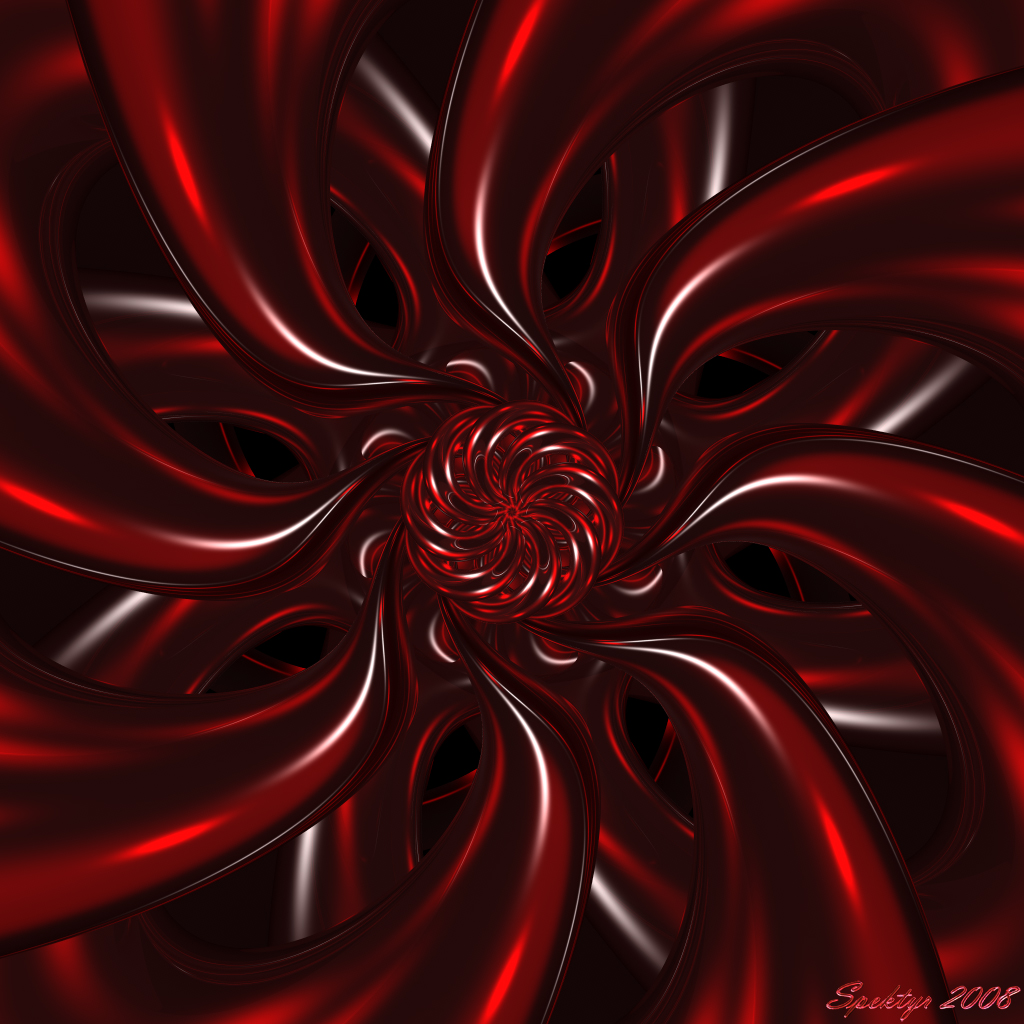
This one is nicely 3D and I'm very pleased with the way it came out. All comments are welcome and appreciated.
Loading unique views4,687 unverified legacy hits5.0 archived rating2008-07-18 added
FROM THE COMMUNITY COLLECTION
This one is nicely 3D and I'm very pleased with the way it came out. All comments are welcome and appreciated.
Comments 12
A conversation around the artworkSign in to join the conversation.
Well, it's true that there is no perfect mirror that will not cause photon scatter resulting in gradual light attenuation but if there was I bet you would not see a sudden loss of reflection equivalent to a ray depth limit like in Bryce. ;-)
It is not, it exhausts itself because the reflecting surface absorbs a tiny bit of light (even a silver mirror does, as any astronomer can tell you) and also because the light gets attenuated by the air from one bounce to the next. In Bryce, I found that after 100 it doesn't make any noticable difference.
I would agree that the Ray Depth of reality is indeed infinite. It is not limited by the mathematical calculations needed to create a simulation of it. It just [I]is[/I]. ;-)
I do already know what ray depth is. In a few of Spektyr's earlier works some of the ray counts were in cases too high or too low. The lower ray depth means that the light penetrates fewer surfaces making shadows deeper in a scene like this. For the chess scene the ray depth was increased to 12 to avoid black splotches of "I give up" pixels. I often find myself wondering what is the ray depth of real life? Infinite like all other things reality.
MRD is a very important render option setting. Place a mirror in front and one in back of the camera and watch what happens. In some kind of abstracts MRD setting is crucial. It affects reflection and hence light. It also affects the complexity of the abstract.
It was the "maximum" that threw me. I always referred to it as plain "ray depth." I get you now. Thanks. Whatever you did it works!
MRD=Maximum Ray Depth It's listed under 'Shadows' in the 'Optics' section of 'Render Options'. One of its aparent funtions is controlling the number of concurrent reflections.
What exactly is MRD?
Thanks Guys! The lower MRD setting (2) made this smoother and gave it a cleaner 3D effect. Normally low MRD tends to flatten the image but it worked very nicely here. High MRD settings tend to overwhelm the image with reflections and can sometimes ruin the 3D effect depending on the setup. It can be really tricky choosing settings that create the best visual impact. I never stop learning through experimentation. ;-)
Simple and complex at the same time. Outstanding geometry. Though not my favorite colours, they are excellently blended. I second richter here: 5/5.
You should've named this one "Ferrari"! Fine resolution, high quality rays/pixel, amazing... amazing interaction between the chosen red, white and black colors, I'm not aware of the technical side of this setup, but from an artistic point of view my vote is 5/5! As if I'm watching a commercial shot where these beautiful "metal cream" forms are gently mixed in order for something even more fascinating, for something noble to emerge, the gorgeous shape of a Ferrari that is. This image directly goes to my "Bryce & Poser" favorites directory. Very good, Spektyr!
This is a real twister in the red zone. I like the way this seems to wrap itself around itself. It almost seems to be reaching out. Great colors.