FROM THE COMMUNITY COLLECTION
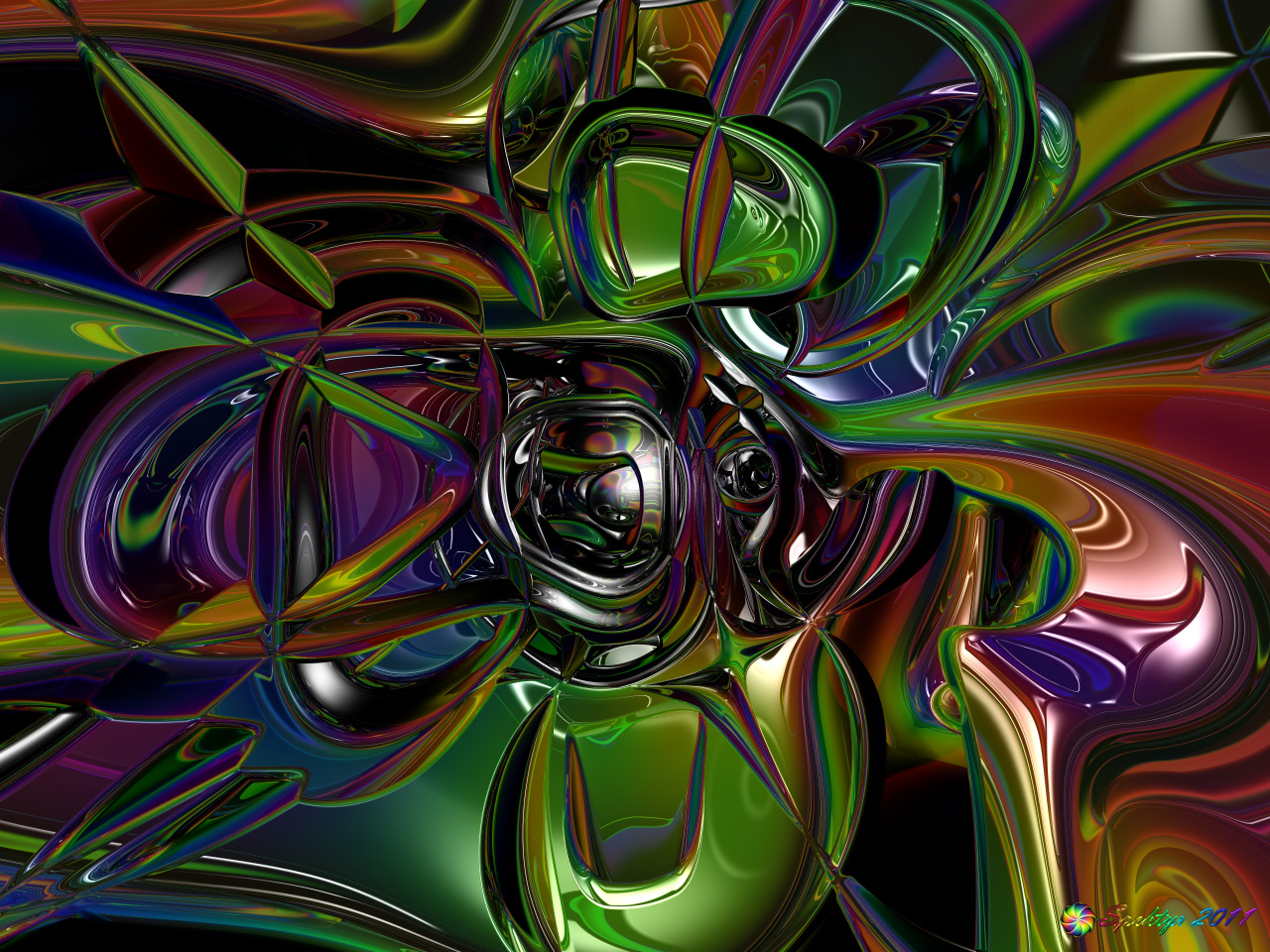
Lunatic Fringe
Remember that old Red Rider tune? It's one of my FAVES! ;-) This is a departure from my usual symmetrical work, which I'll admit is getting monotonous even for me. The fact is I'm running our of clever tricks for them and I decided to shift my focus to asymmetrical images. I'm hoping this will inspire me to be more productive, at least when my back will allow it. In this one I was playing with the 'Liquid' Noise material settings as a bump map on the inside of my usual mirror sphere. Illumination is from the sun and my patented Rainbow light ring. As always, all comments are welcome and appreciated.
Loading unique views4,448 unverified legacy hits0.0 archived rating2011-01-20 added
Comments 4
A conversation around the artworkSign in to join the conversation.
Thanks, Horo! I remember that asymmetrical has always been a preference of yours. I do agree that asymmetrical images offer more for the eye to explore and, after all, the most popular image in my gallery, Liquid Colors 3, is asymmetrical. What puzzles me about that is I don't see that one as one of my more attractive images. I guess, as you say, it's all a matter of taste. ;-)
It is, of course, always a question of taste. I like your depart from complete symmetry to not fully symmetrical ones. It makes it more interesting and keeps me looking longer on it.
Thanks Dave. I'm not sure about using a rainbow as a texture component but I did some playing with the Anisotropic channel on the new abstract I'll be posting in a little while. I can see the 'rings' in part of the image and it has some interesting blending effects. You're right about it being something new to experiment with. I have to figure out that new Displacement channel as well.
I cannot help you with abstractions directly since they are largely beyond my understanding, however, I can suggest if you are looking for a new direction to excite your creative interest and you have Bryce 7.1 then consider giving anisotropic effects a whorl. You can drive the anisotropic specularity directly with the colour channels from a procedural component and using the same colours in the specular colour and halo will provide weird and wonderful results - almost like holograms if a full spectrum of colours is used in the texture component.